 Viewed: 44
This article is translated from the Chinese-language original of
Commentary on China's Wine Industry, Volume 1.
Photo Credit: Nati Levy
Introduction
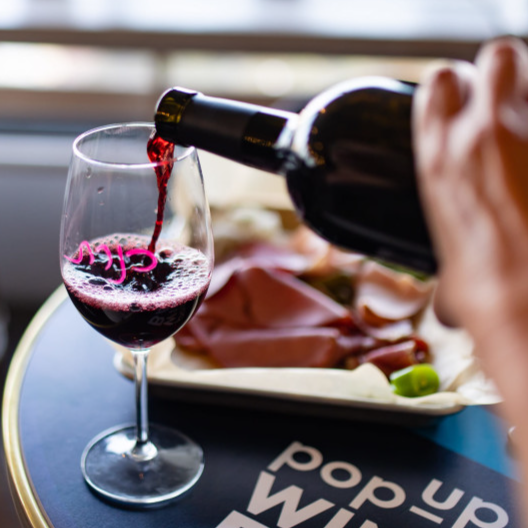
As wine moves from cellars and restaurants into urban markets and pop-up scenarios, this "light-asset, experience-intensive, high-dissemination" sales model is emerging as a new path for the industry to break through traditional channels. By comparing the maturity differences between domestic and international models, combined with the author's interviews with leading wine merchants and on-site observations, this paper objectively analyzes the practical performance in six cities: Beijing, Shanghai, Guangzhou, Shenzhen, Chengdu, and Hong Kong. It summarizes actionable core strategies, providing practical references for the business model of wine markets.
1. Comparison of Domestic and International Models
1.1 International: The "Experience + Culture + Sales" Closed Loop Under a Mature System
After a century of development, international wine markets have evolved from early regional trade exhibitions into a mature business form that integrates cultural symbols, urban business cards, consumption scenarios, and user operations. Its underlying logic is "rooted in culture, centered on experience, and targeted at long-term operation," rather than short-term traffic and on-site sales. The overall model is highly standardized, specialized, and branded, forming a replicable, sustainable, and precipitable business closed loop.
Deep integration of scenarios and consumption: Wine transforms from a "commodity" to a "lifestyle": Mature international markets do not treat wine as a standalone beverage for sale. Instead, they embed it into real scenarios such as urban life, outdoor leisure, art, and entertainment, achieving natural penetration between scenarios and consumption. In Bordeaux, France, barreled fresh wine is introduced into urban music festivals and block parties, sold openly alongside beer and soft drinks. This reduces the sense of distance of "alcohol exhibition" and enhances social attributes. Eventually, wine sales in the same scenario surpass beer, with the core logic being that the scenario lowers the psychological threshold for consumption. In Napa Valley, USA, based on the winery cluster, the market is linked with cycling, hot air balloons, outdoor picnics, independent film festivals, and rural homestays to build a "wine + cultural tourism" system. Consumers do not come to buy wine, but pay for a complete vacation experience. As a result, their stay duration, participation depth, and subsequent repurchase intention are significantly higher. Data shows that approximately 35% of on-site experiencers will complete online repurchases through winery official websites and membership channels after the event, realizing the extension from offline experience to long-term online consumption.
Standardized operation and specialized division of labor: Industry collaboration rather than disorderly competition: International wine markets are generally coordinated and led by regional associations, industry guilds, and official institutions (such as the Bordeaux Wine Industry Association BIVB in France). Unified rules have been established for site planning, wine access, quality review, price regulation, and service standards, preventing wine merchants from engaging in low-price involution, overlapping product selection, and uneven services. A clear division of labor has been formed at the operation end: wine merchants are responsible for products and professional expression, sommeliers for tasting education and experience, catering and cultural and creative brands for scenario support, and the site operator for passenger flow and order maintenance. The entire chain is efficient and professional. In terms of consumption patterns, it simultaneously covers entry-level wine-by-the-glass, mid-range all-you-can-drink options, high-end full bottles, and collectible wine pre-orders, encompassing all groups including passersby, enthusiasts, and collectors, realizing the structural design of "low-threshold entry, high-value retention."
Long-term transformation with coordinated effect and performance: The market becomes a connection entry point between brands and users: For international wine merchants and producing regions, the core value of the market has long gone beyond on-site sales. It has become a core position for new product testing, brand exposure, user acquisition, and word-of-mouth precipitation. On-site activities generally set up actions such as low-threshold membership registration, social account following, membership point accumulation, and online mall binding, converting one-time on-site visitors into reachable, operable, and repurchasable long-term users. Eventually, a complete closed loop of "offline immersive experience → precise online touch → repurchase and fission → word-of-mouth feedback to the market" is formed. This model transforms the market from a "short-term activity" into a fixed link in the brand's annual operation system, endowing it with continuous vitality.
1.2 Domestic: Rapid Rise but Still in the "Uninhibited Growth" Stage
Domestic wine markets started in the past five years, exploding rapidly alongside the urban slight-intoxication economy, outdoor economy, and market boom. However, they are still in the early development stage characterized by rapid scale expansion, weak professional precipitation, high model homogeneity, and short operation chains. Compared with the mature international system, they show obvious features of "valuing traffic over experience, weak culture, and short closed loops," and have not yet formed a stable and sustainable business model.
Severe model homogeneity: Trapped in price involution and category red ocean: The vast majority of domestic markets still remain in the primary exhibition form of "setting up stalls to sell wine," lacking thematic planning, scenario creation, and cultural narrative. The wines are mainly basic models with large circulation and low recognition, with high overlap in producing regions, varieties, and price ranges. Organizers generally pursue the number of stalls and on-site passenger flow, ignoring differentiated positioning, resulting in extremely high substitutability between markets. They can only rely on low-price coupons, free tastings, and gift-giving activities to attract customers, falling into price wars rather than value competition, making it difficult to form brand memory and user loyalty.
Insufficient operation specialization: The wine sector has long been in a "supporting role" position: Most domestic markets are attached to coffee festivals, food festivals, cultural and creative festivals, and shopping mall warm-up activities, with wine only appearing as a supporting business form. Site resources, promotion weight, and service configurations are all compressed. Professional capabilities are generally lacking: no standards for product selection, almost no sommelier services, a weak wine-tasting atmosphere, and confusing matching logic. Consumers find it difficult to obtain effective cognition and pleasant experiences, leading to low participation, short stay duration, and weak purchase decisions. Ultimately, the repurchase rate is generally low.
Broken transformation chain: Traffic cannot be precipitated into brand assets: Domestic market operations generally pursue immediate on-site transactions, lacking user operation awareness and digital layout. Actions such as scanning codes to join memberships, private domain precipitation, online linkage, and post-event return visits are rarely carried out. Once the event ends, the traffic terminates. One-time foot traffic cannot be converted into operable user assets, reducing the market to a "one-time business." It cannot feed back the long-term growth of brands, nor can it form continuous repurchases and word-of-mouth communication, greatly compressing its commercial value.
2. Comparison of Practices in Six Domestic Cities
2.1 Shanghai: Benchmark Effect with the Most Mature Model
As the city with the most cutting-edge domestic consumption, the most popular wine education, and the largest concentration of young groups in China, Shanghai has become the benchmark for domestic wine markets. Its core competitiveness lies in clear themes, professional operations, and a complete digital closed loop, making it the city sample that currently most closely resembles the mature international model.
Shanghai's markets generally abandon the all-inclusive approach and turn to segmented thematic operations, such as natural wine, single producing regions, single grape varieties, and seasonal slight intoxication, accurately targeting young white-collar workers, high-end consumers, and wine enthusiasts. In the 2025 "No Riesling, No Summer" German Wine Festival in Xintiandi, Shanghai, with vertical grape varieties as the core, it gathered hundreds of high-quality wines, paired with professional host interactions, and combined Xiaohongshu content seeding and social e-commerce transformation, realizing the full-link integration of "online drainage → on-site experience → immediate order placement → private domain repurchase." The 2024 University Road International Wine Festival targeted young traffic with cost-effective all-you-can-drink tickets: 49 RMB for single tickets and 119 RMB for double tickets lowered the participation threshold, while maintaining brand richness and on-site professionalism, achieving a double explosion in passenger flow and sales.
The essence of the Shanghai model is to reduce competition through precise positioning, enhance value with professional services, and precipitate users with digital tools. A standardized system has been formed from thematic planning and on-site execution to subsequent operations, so it has the strongest sustainability and replicability, becoming the core sample for other domestic cities to learn from.
2.2 Hong Kong: International Benchmark and Model of Cultural-Tourism Integration
Relying on its free trade port status, international passenger flow, high-end consumption power, and tourism resources, Hong Kong has upgraded its wine market into a city-level cultural-tourism IP. The representative event is the "Hong Kong Wine and Dine Festival," whose core model is "high-end, international, and scenario-integrated," forming a clear distinction with mainland markets.
Hong Kong's markets take global famous wineries, niche high-quality wines, and top-level food-wine pairing as their core competitiveness. The stall structure is 70% wine and 30% Michelin-level food, forming strong complementarity to create a one-stop high-end tasting experience. The event relies on landmark scenarios such as Victoria Harbour, superimposed with policies and resources such as tourist visas, hotel packages, and scenic spot linkages, attracting a large number of international tourists and high-net-worth individuals. In 2025, the Wine and Dine Festival recorded 163,000 visitors, with a significant year-on-year increase in merchant sales. The core logic is to upgrade the wine market from an industry event to an urban tourism consumption engine, realizing a win-win situation for wine merchants, business districts, cultural tourism, and the government. Its core competitiveness lies in international product selection capabilities, high-end service standards, and cultural-tourism resource integration capabilities, which cannot be simply replicated in mainland cities.
2.3 Chengdu: Huge Traffic and the Core of the Southwest Market
Relying on the wine industry foundation of the Chengdu Spring Sugar and Alcohol Fair, the huge consumer population in Sichuan and Chongqing, and the leisure consumption atmosphere, Chengdu has become the traffic center of wine markets in Southwest China. Its model is characterized by large scale, wide radiation, strong localized adaptation, and a high degree of youthfulness, but there is still room for improvement in professional depth and long-term transformation.
Chengdu's markets are oriented towards "popularization, youthfulness, and localization," better fitting the preferences of the Southwest market: introducing easy-to-drink small-bottle wines, canned wines, and cost-effective food-friendly wines, and strengthening localized matching education between wine and Sichuan cuisine, hot pot, and barbecue to lower the acceptance threshold for local consumers. In 2025, the "Joy Wine Grand Tasting" was launched in Chengdu, gathering over 150 wineries and more than 500 wine varieties, with a single-event passenger flow exceeding 800 person-times, reflecting a strong consumption-driven effect.
The advantage of the Chengdu model lies in its traffic base and regional radiation capabilities. However, constrained by rapid expansion and scale priority, professional services, circulation planning, and user operations are still relatively extensive. Its future core direction is to enhance specialization and transformation efficiency while maintaining traffic advantages, achieving a balance between "scale and quality."
2.4 Beijing: High-end Positioning with Prominent Government-Enterprise Collaboration
Beijing's wine markets show obvious high-end, government-oriented, and quality-oriented characteristics. Relying on government-enterprise resources, cultural landmarks, and the aggregation of high-net-worth individuals, they follow a boutique route. Their traffic scale is smaller than that of Shanghai and Chengdu, but the experience texture and brand level are higher.
Beijing's markets are mostly led by the government, business districts, and state-owned enterprise-backed institutions, such as the Financial Street Wine Culture Carnival and Miyun Wine Culture Festival. Their locations are concentrated in core urban business districts and ecological cultural-tourism zones, emphasizing cultural dissemination, quality display, and interactive experiences (such as tasting passports, blind tasting challenges, and consumer selection). The audience is mainly business people, high-net-worth families, and professional enthusiasts. In terms of operation, it focuses on government-enterprise collaboration and mutual connectivity between business districts, realizing shared rights and mutual passenger flow guidance. The overall tone is standardized, the quality is stable, and the reputation is good.
The shortcomings of the Beijing model are insufficient youthfulness, weak mass penetration, and low commercial flexibility. It is more inclined to cultural display and quality benchmarks rather than popular traffic markets, forming a clear difference from Shanghai's marketization and Hong Kong's internationalization.
2.5 Shenzhen: Innovation-Driven, Integrating Cross-Border and Instant Retail
With its proximity to Hong Kong and Macau, developed cross-border e-commerce, young immigrant city characteristics, and fast consumption pace, Shenzhen has embarked on an innovative, lightweight, and instant retail-oriented market route. Its core advantages are cutting-edge product selection, flexible models, and a high degree of digitalization, but cultural precipitation and experience depth are still insufficient.
Shenzhen's markets generally focus on natural wine, niche independent wines, and cross-border direct-purchased wines, using the market as a "pre-test field" for new product testing and market verification. After collecting user feedback through small-scale markets, they decide whether to purchase goods on a large scale and distribute them online. In terms of consumption patterns, it emphasizes "wine-by-the-glass for tasting + full-bottle instant retail," paired with intelligent wine dispensers, self-service ordering, and same-city express delivery, adapting to the efficient, convenient, and lightweight consumption habits of young groups.
The core of the Shenzhen model is to make up for the lack of cultural accumulation through innovation and efficiency. However, over-reliance on cross-border price advantages and instant consumption can easily lead to the dilemma of "valuing transactions over experience." In the long run, it is necessary to strengthen cultural expression, scenario creation, and user precipitation, shifting from price competition to value competition.
2.6 Guangzhou: Dominated by Traditional Models, Urgently Needing Upgrading
As a traditional commercial and trade city, Guangzhou's wine markets are still highly dependent on traditional exhibitions, wholesale markets, and established business districts. The overall model is conservative, with insufficient innovation and weak experience. There is a clear gap with cities such as Shanghai, Chengdu, and Hong Kong, and it is in a stage of urgent upgrading.
Guangzhou's markets are mainly based on traditional wine merchant exhibitions, circulating goods exhibitions, and low-price high-volume sales, lacking thematic design, scenario creation, and professional services. The wines are highly homogeneous, with few youthful products and weak interactivity. They are more "trade-oriented exhibitions" rather than "experience-oriented markets." Even with attempts at brand pop-ups, it is difficult to form city-level influence due to small scale, low exposure, and shallow operations.
The core pain points are vague positioning, extensive operations, and lagging youth-oriented transformation. It has failed to seize the slight-intoxication economy and young consumption trends, still remaining in the traditional bulk wine wholesale mindset. The future upgrading direction must shift to thematic, specialized, and digital operations, strengthening scenario experience and user operations to keep up with the development rhythm of domestic markets.
3. Summary of Core Strategies: Practical Experience from Wine Merchants (Selected Interviews and Analysis)
3.1 Precise Positioning to Create Differentiated Themes
The founder of Company A shared in the interview: "If a market wants to truly succeed, the core must be differentiation. You can't do all kinds of wine and target all customer groups. When we held the Spanish wine-themed market on Shanghai's University Road, we firmly focused on Spain's national-level wine brands, paired with authentic delicacies such as Iberian ham and Tapas, directly avoiding the red ocean of all-category wine markets. At the same time, we set the price at 49 RMB for all-you-can-drink tickets, accurately capturing the tasting needs of college students and young white-collar workers. The passenger flow on the first day of the event directly exceeded expectations by more than double."
Abandon the all-inclusive all-category approach, focus on entering a sufficiently segmented and recognizable track, such as vertical themes of natural wine, small-bottle sparkling wine, single producing regions (Burgundy, New Zealand, Ningxia, etc.), and single grape varieties (Riesling, Pinot Noir). At the same time, make customized adjustments based on the temperament of the host city: Shanghai leans towards light luxury and refinement, Chengdu focuses on relaxation and leisure, and Hong Kong emphasizes high-end internationalization. Make the market style highly match the aesthetic of the city's population, forming a unique memory point that allows consumers to associate an exclusive label with the market, rather than a uniform wine exhibition.
3.2 Diversified Consumption Modes to Lower Experience Threshold
Z, a representative of Country D's wine estate, mentioned when talking about market operations: "When we held the Riesling-themed market in Shanghai Xintiandi, the core idea was to lower the entry threshold, so that more people dared to drink and were willing to try. Instead of pushing full bottles and high-priced packages from the start, we first offered 19.9 RMB entry-level wine-by-the-glass, allowing passersby to experience it for the price of a cup of milk tea. Then we set up a 99 RMB all-you-can-drink area to meet the needs of deep enthusiasts. At the same time, the whole venue was equipped with intelligent wine dispensers, which not only reduced labor pressure and improved wine serving efficiency, but also made consumers more comfortable when choosing wine on their own. The final data was very intuitive: the on-site purchase conversion rate directly reached 15%."
Abandon the single sales model, adopt a three-tier combined pricing structure of wine-by-the-glass, all-you-can-drink, and full-bottle purchase, covering all consumption levels from passersby's tasting and light experience to heavy procurement. Pair it with equipment such as intelligent wine dispensers and self-service code-scanning ordering to simplify the purchase process and reduce queuing waiting. At the same time, flexibly adjust the proportion of each area according to on-site passenger flow, so that low-budget people can participate without pressure, while providing complete purchase plans for high-demand customers, maximizing coverage of people with different consumption capacities and different drinking habits.
3.3 Cross-Border Linkage to Amplify Traffic Effect
The G event organizer shared their traffic strategy: "Simply doing a wine market has too narrow an audience. We directly broaden the scenario — linking local Michelin restaurants, popular tourist attractions, and star hotels to launch integrated packages of wine tasting + food + tourist check-in. This not only attracts local enthusiasts, but also captures global transit tourists. After the whole event in 2025, it directly drove a 40% increase in overall consumption in the surrounding business district, and the market itself transformed from a single wine exhibition into a city-level check-in activity."
Break out of the "only selling wine" mindset, follow the Wine+ composite business form route, and actively link young brands such as coffee brands, light food desserts, cultural and creative handicrafts, independent art, Livehouse, and camping equipment to realize traffic sharing, mutual benefit of rights, and joint promotion. It can also be combined with urban landmarks, cultural-tourism projects, and shopping mall activities to embed the wine market into a larger consumption scenario, making the market not just about selling wine, but a one-stop leisure experience, doubling the traffic with the help of partners' customer groups.
3.4 Digital Operation to Achieve Long-Term Transformation
The operation director of J Winery particularly emphasized: "Now when doing markets, we can no longer do one-time foot traffic business. We must do precipitable, repurchasable long-term business. Before each event, we use Xiaohongshu KOLs and local life accounts to do content preheating, guiding online traffic to offline in advance. At the site, we set up low-threshold code-scanning membership registration, directly distributing exclusive online mall coupons and next-store visit discounts, transforming one-time tourists into private domain users. After a single event, the number of new private domain users often reaches thousands, and the subsequent repurchase rate stabilizes at 20%. The market has truly become an entry point for brands to acquire customers, rather than a one-off business that ends after a few days of setting up stalls."
Build a complete operation closed loop of online preheating and drainage → offline experience undertaking → private domain precipitation and repurchase. In the early stage, use Douyin, Xiaohongshu, WeChat Channels, and Dianping for localized seeding, releasing early bird tickets and limited experience qualifications to create a sense of scarcity. At the site, complete membership registration and group addition through simple and efficient code-scanning actions, and simultaneously distribute exclusive online benefits. After the event, continue to carry out wine science popularization, limited-time flash sales, and offline tasting invitations in the private domain, transforming the one-time traffic of the market into long-term brand users, realizing the extension from "market sales" to "long-term revenue."
3.5 Professional Services to Enhance Experience Texture
The person in charge of M Winery took the local market as an example and said: "Consumers in Southwest China love food, understand food, and care a lot about experience. In events such as the Joy Wine Grand Tasting, we specially arrange professional sommeliers to be on site. They don't just pour wine, but also explain in detail the flavor of each wine, the suitable drinking temperature, especially the matching skills between wine and Sichuan cuisine, such as what sparkling wine goes with spicy hot pot and what dry red wine goes with braised food. Consumers listen attentively and drink with a clear understanding. The average stay duration directly extends from 5 minutes to 15 minutes. The longer they stay, the stronger their willingness to buy, and the overall on-site sales increased by 30%."
Shift from "selling wine" to "creating experience." Equip professional sommeliers and wine tasters to provide explanations, answers to questions, and matching suggestions, so that consumers not only drink wine, but also acquire knowledge. At the same time, optimize the site circulation to achieve clear entrances, clear partitions, short queues, and sufficient rest areas. Aiming at the pain point of inconvenience in carrying full bottles purchased on site, provide supporting services such as on-site wine storage, express delivery on behalf of customers, and same-city flash delivery to solve consumers' last-mile concerns. In terms of details, optimize hardware such as wine glasses, ice buckets, and tasting tables, using professionalism to enhance the overall texture, making consumers willing to stay, share, and pay.
4. Conclusion and Outlook
As an emerging sales model, the core value of wine markets lies in breaking the barriers of traditional channels, driving consumption through experience, and empowering brands with culture. The core of the mature international model is the closed loop of "experience + culture + transformation." The six domestic cities show differentiated characteristics: Shanghai and Hong Kong have mature models, Chengdu and Shenzhen have outstanding innovations, Beijing has obvious high-end positioning, and Guangzhou is in urgent need of upgrading.
For wine merchants, there is no need to follow the trend blindly. They should combine urban characteristics and their own resources, focus on the three cores of "differentiated themes, low-threshold experience, and long-term transformation" to create exclusive models. In the future, with the improvement of consumers' awareness of wine culture, the market model will shift from "traffic competition" to "quality competition." Only by deeply cultivating experience and precipitating users can we seize the initiative in the industry transformation.
Reference
Belciu, A., Corbea, A. M. I., Diaconita, V., Ducman, A. A., & Simonca, I. (2023). Government oversight and economic impacts: Sustainability in the vineyard and the evolution of wine regulations, trade and production. Agronomy, 13(12), 2991. https://doi.org/10.3390/agronomy13122991
Du, Y., & Morrish, S. C. (2025). Understanding the wine consumption behaviour of young Chinese consumers. Beverages, 11(4), 109. https://doi.org/10.3390/beverages11040109
Gois, T. C. D., Paiva, V. A. L., & Thomé, K. M. (2023). Wine international market structure and competitiveness. International Journal of Wine Business Research, 35(4), 561–579. https://doi.org/10.1108/IJWBR-03-2023-0018
Hoque, M. M., Jiang, Y., & Park, B.-J. (2023). Exploring the influence of pop-up store experiences on consumer word-of-mouth intentions: The mediating role of brand charisma. International Journal of Applied Science and Convergence Technology, 12(4), 246–254. https://doi.org/10.7236/IJASC.2023.12.4.246
Thomé, K. M., Paiva, V. A. L., & Gois, T. C. D. (2023). Wine international market structure and competitiveness. International Journal of Wine Business Research, 35(4), 561–579. https://doi.org/10.1108/IJWBR-03-2023-0018
Wang, G., Ye, Y., Yang, Y., & Huang, Q. (2023). Identifying and examining the role of pop-up store design: A mixed-methods study. Journal of Retailing and Consumer Services, 75, Article 103503. https://doi.org/10.1016/j.jretconser.2023.103503
Ye, Y., Yang, Y., & Huang, Q. (2023). Identifying and examining the role of pop-up store design: A mixed-methods study. Journal of Retailing and Consumer Services, 75, Article 103503. https://doi.org/10.1016/j.jretconser.2023.103503
Zhang, E., Wang, G., & Zhou, Y. (2025). Spatial-temporal distribution characteristics and influencing factors of new retail stores: A case study of Freshippo stores in Shanghai. Humanities and Social Sciences Communications, 12, 1541. https://doi.org/10.1057/s41599-025-05851-3
Author's Bibliography
Dr. Jiajia Pan completed his undergraduate studies at Université Blaise Pascal (Clermont-Ferrand II) in France and Copenhagen Business School in Denmark, earned his master's degrees from Université Jean Moulin (Lyon III) in France and Lingnan College of Sun Yat-sen University, and obtained his doctoral degree from The Education University of Hong Kong.
He holds the national first-level oenologist and national first-level wine taster qualifications in China, and also serves as a winery investor and publisher. He is currently an off-campus supervisor for master's programs at the School of Tourism Management of Sun Yat-sen University, the School of Tourism of Xinjiang University, the School of Tourism Management of South China Normal University, the School of Wine and Horticulture of Ningxia University, and Burgundy School of Business.
With 20 years of experience in the wine industry, his business scope covers international trade, brand marketing, market sales, winery investment, cultural communication and professional personnel training and education.
In terms of academic achievements, he is the co-editor-in-chief of the China Wine Industry Integrated Development Report (Blue Book of China Wine Industry), and has edited and published multiple wine-related textbooks and books including Sommelier Service and Management and Tasting Chinese Wine. He initiated the "China Wine Academy" program, which promotes the global outreach of Chinese wine brands and culture by building an international education system for Chinese wine.
His research interests cover wine marketing, wine tourism, wine sensory evaluation, wine supply chain management and vocational education. He also serves as the editor-in-chief of the Chinese-English journals Global Cases and Practices of Vocational Education and Commentary on China's Wine Industry.