 Viewed: 71
This article is translated from the Chinese-language original of
Commentary on China's Wine Industry, Volume 1.
When British black tea, with its exquisite tea bags and standardized blended flavor, has gained widespread popularity in cafes and convenience stores across Chinese cities, few people recall that this plant originating from the East was once an exotic product "re-shaped" by the British according to their local tastes. The counterattack journey of tea, from fresh tea leaves in Wuyi Mountain, China, to a standard staple of British afternoon tea, precisely points out the core logic of localized survival for Chinese wine, which is also an imported product: respect local consumption habits, rather than rigidly replicate the stereotyped paradigms of the origin regions.
For China, wine is a "foreign guest" with the aura of exotic culture, just as tea was to Britain in the 17th century. For a long period, China's wine industry has been trapped in a "foreign-worshipping myth": winemakers are obsessed with replicating the tannin structure of Bordeaux and the acidity performance of Burgundy, while the market is keen to label quality with marketing terms such as "Old World flavor" and "oak barrel aging years". It seems that any taste that deviates from European standards is synonymous with "lack of professionalism". As a result, we have seen a batch of products labeled with "international style" left unsold on shelves. They accurately reproduce the characteristics of European wines, but ignore the taste preferences of Chinese consumers: they dislike overly astringent tannins, prefer wine bodies with rich fruity aromas and smooth mouthfeel, and pay more attention to the compatibility of wine with Chinese dishes rather than the so-called "terroir narrative".
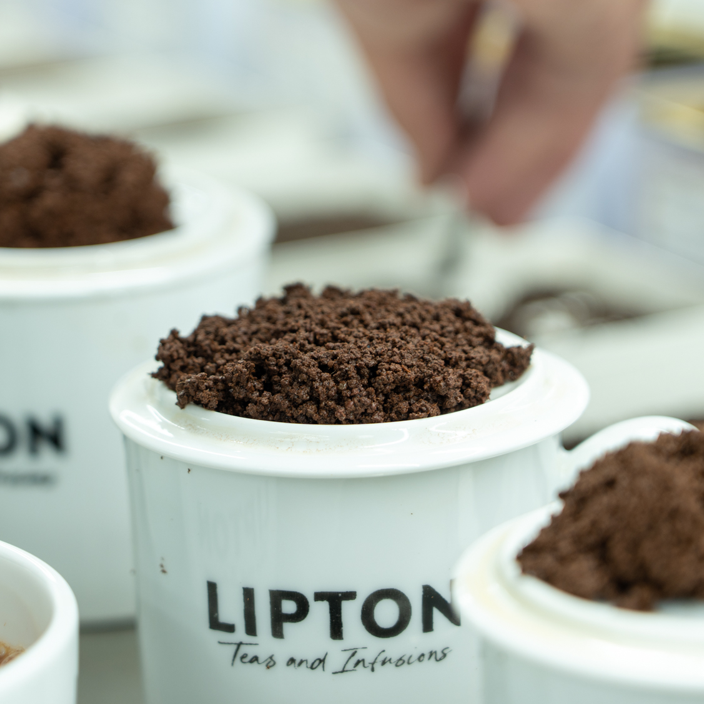
The British transformation of tea can be regarded as a textbook case of localized operation. Instead of rigidly adhering to the traditional Chinese way of drinking tea without additives, they added sugar and milk to tea according to their local cold and gloomy climate and heavy-tasting eating habits, creating a mellow and mild taste. They processed loose tea into portable tea bags to adapt to the fast-paced lifestyle after the Industrial Revolution. They constructed the consumption scenario of "afternoon tea", upgrading tea from a beverage to a social and cultural symbol. It is this deep catering to local demands that allowed tea to take root in Britain, and then be exported back to the hometown of tea, giving rise to global tea brands such as Lipton and Twinings.
In contrast, the key to breaking through in China's wine market lies precisely in abandoning the obsession of "European standards supremacy" and bending down to study the real demands of local consumers. The Chinese dining table has never been dominated by steak and foie gras, but is a world of hot pot, Peking duck and braised pork in brown sauce. This requires corresponding adjustments to wine taste: reduce the roughness of tannins, enhance the roundness of the wine body, and use more vivid fruity aromas to match the salty, fresh, spicy and fragrant flavors of Chinese dishes. In terms of consumption scenarios, it is necessary to break the shackles of "exclusive for high-end banquets", develop small-bottled and easy-to-drink products to adapt to daily scenarios such as family dinners and casual drinks with friends. In terms of cultural expression, there is no need to forcefully present "French romance" or "Italian style". Instead, we can explore local terroir stories — the gravel soil of Helan Mountain and the marine climate of the Shandong Peninsula can all become unique cultural business cards exclusive to Chinese wine.
The transformation from "imported product" to "local favorite" is never a simple imitation game, but an innovative re-creation based on local demands. The success of British black tea lies in its thorough understanding of British people's taste buds. The future of Chinese wine is also inevitably hidden in the dining tables and wine glasses of Chinese consumers. When we are no longer obsessed with "making wine that tastes like French wine", but focus on "making wine that Chinese people love to drink", Chinese wine can truly embark on its own long-term path. Just like British black tea in the past, it will firmly establish a foothold in the local market, and even reversely influence the pattern of the global wine industry.
Reference
Jiao, H., Liu, A., & Xie, C. (2022). Research summary of winemaking grape varieties Beimei and Beihong in Ningxia production area. Farm Products Processing, (12), 104–105, 108.
Ma, J., Liu, C., Shan, S., Lei, H., Li, Y., & Shao, J. (2023). Comparative analysis of aroma components of wines made from four non-buried overwintering grape varieties in the eastern foothill of Helan Mountain. Sino-Overseas Grapes & Wine, (1), 24–31.
Wang, J. (2024, December 11). Breeding high-quality varieties to create "Ningxia-flavored" wine. Ningxia Daily, p. 7.
Yang, Y., Zhang, X., Chen, R., Ding, Q., Feng, R., Li, F., & Fan, J. (2021). Identification of cold resistance of branches of four winemaking grape varieties in the eastern foothill of Helan Mountain. Journal of Arid Land Resources and Environment, 35(3), 183–189.
Zhang, Y. Y. (2023). Terroir research of Gezishan sub-wine region in the eastern foothill of Helan Mountain based on soil and variety characteristics (Master's thesis, Northwest A&F University).
Author's Bibliography
Dr. Jiajia Pan completed his undergraduate studies at Université Blaise Pascal (Clermont-Ferrand II) in France and Copenhagen Business School in Denmark, earned his master's degrees from Université Jean Moulin (Lyon III) in France and Lingnan College of Sun Yat-sen University, and obtained his doctoral degree from The Education University of Hong Kong.
He holds the national first-level oenologist and national first-level wine taster qualifications in China, and also serves as a winery investor and publisher. He is currently an off-campus supervisor for master's programs at the School of Tourism Management of Sun Yat-sen University, the School of Tourism of Xinjiang University, the School of Tourism Management of South China Normal University, the School of Wine and Horticulture of Ningxia University, and Burgundy School of Business.
With 20 years of experience in the wine industry, his business scope covers international trade, brand marketing, market sales, winery investment, cultural communication and professional personnel training and education.
In terms of academic achievements, he is the co-editor-in-chief of the China Wine Industry Integrated Development Report (Blue Book of China Wine Industry), and has edited and published multiple wine-related textbooks and books including Sommelier Service and Management and Tasting Chinese Wine. He initiated the "China Wine Academy" program, which promotes the global outreach of Chinese wine brands and culture by building an international education system for Chinese wine.
His research interests cover wine marketing, wine tourism, wine sensory evaluation, wine supply chain management and vocational education. He also serves as the editor-in-chief of the Chinese-English journals Global Cases and Practices of Vocational Education and Commentary on China's Wine Industry.