 Viewed: 55
This article is translated from the Chinese-language original of
Commentary on China's Wine Industry, Volume 1.
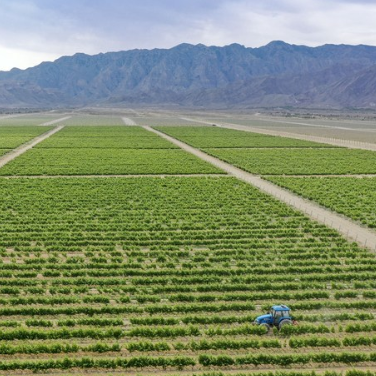
Photo Credit: Xinhua/Feng Kaihua
Chinese wine is no stranger to banquets, tasting events, and gift boxes. Yet one reality has never been fully acknowledged: in many cases, Chinese wine has not truly begun.
Here, “beginning” does not mean the moment when the first bottle is opened. It refers to the moment when wine enters everyday choice and forms a stable relationship with consumers. If a bottle of wine only appears when it is introduced, arranged, or given as a gift, then it remains in a state of “not yet beginning.”
Many consumers have had similar experiences. At an event or a gathering with friends, they taste a domestic wine and find it quite acceptable, or even enjoyable. A few days later, when they want to buy a bottle for themselves, they suddenly realize that they cannot remember the exact name. They only remember that it came from “that winery” or that “there seemed to be several different series.” When they open an e-commerce platform, a row of similar labels, different prices, and different product levels appears under the same brand. After a brief hesitation, they close the page.
It is not that they do not want to buy. It is that they do not know where to begin.
This state of being “stuck before the beginning” is not uncommon in Chinese wine consumption. From the industry’s perspective, wineries often appear to be fully prepared: complete product lines, clear hierarchies, rich series, and a logical positioning for every bottle. But from the consumer’s perspective, this can feel like being thrown directly into a map without an entrance.
When compared with other mature consumer goods, we can see that the “beginning” is often deliberately designed to be simple. When people drink coffee for the first time, most do not begin with origin, processing method, or roasting theory. They usually start with a common latte. When people buy beer for the first time, few begin by studying styles and categories. They often choose the one that “everyone is drinking.” Even in countries with mature wine consumption cultures, many people’s first bottle is simply an ordinary, affordable, and stable everyday wine from a supermarket.
A beginning does not require consumers to understand a whole system. It only needs to offer an answer that feels safe and unlikely to go wrong.
Yet in the case of Chinese wine, the situation is often the opposite. Many wineries launch multiple series at an early stage: entry-level wines, core products, upgraded versions, and limited editions all appear at the same time. Each bottle needs to be carefully distinguished, and every difference needs to be explained. As a result, consumers are required to understand the full structure from the very first step.
When the “first bottle” is given too much meaning, the beginning is naturally delayed.
Another typical situation is that Chinese wine is often consumed through group purchases, gift-giving, or organized events. The wine appears in a certain occasion, but rarely finds a place in the consumer’s own life. This kind of consumption completes the process of “being drunk,” but it does not complete the process of “being chosen.” Once the occasion ends, the relationship with the brand is also interrupted.
This leaves Chinese wine in an awkward position: it gains exposure, it does not necessarily disappoint in taste, but it still fails to enter the everyday shopping list of consumers. The industry often explains this phenomenon by saying that “the market still needs to be cultivated.” But the reality may be that the beginning itself has been designed to be too heavy. When the cost of choice is too high and the next step remains unclear, consumption can only stop at the doorway.
The reason wine consumption appears more natural in many foreign markets is not that consumers are necessarily more professional. It is because the beginning happens earlier and the decision cost is lower. The first bottle does not need to be perfectly chosen. It only needs to be affordable, easy to buy, and acceptable to drink. More importantly, the second bottle must be easy to purchase again. Classification, hierarchy, and terroir only begin to matter after repeated consumption. In China, however, consumers are often asked to understand these things before consumption has even truly begun.
This also explains why Chinese wine seems to have everything: wineries, regions, systems, and stories. Yet it still struggles to form a real everyday market. The problem is not a lack of products, but the absence of an entry point that allows consumers to begin casually.
What Chinese wine truly needs is not another explanation of the system. It needs to first provide a clear, stable, and repeatable starting point that consumers can trust. Consumers need to know: if I only want to buy one bottle casually, which one will not go wrong?
When the question of “which bottle should I start with” has an answer, choice becomes lighter. When choice becomes lighter, consumption begins. And only when consumption can be naturally repeated can the market truly begin.
What Chinese wine lacks is not a grander narrative, but a lower-threshold first step. It should not ask consumers to understand wine first. It should allow wine to enter life first.
References
International Organisation of Vine and Wine. (2025). State of the world vine and wine sector in 2024. OIV.
IWSR. (2025, March 20). Five key trends defining opportunities in the global wine market in 2025. IWSR.
Reuters. (2025, April 29). Australia’s surge in wine exports to China begins to slow. Reuters.
Wine Australia. (2026, February 25). New insights on mainland China’s wine consumers. Wine Australia.
Wine Australia. (2026, March 11). Rebooting the Chinese wine market: Identifying key trends for Australian wine exporters. Wine Australia.
Author's Bibliography
Currently as a doctoral candidate. Shumeng Dong is e works at the Marketing Teaching and Research Office, College of Wine Science, Northwest A&F University. She serves as a consultant for the Wine Culture and Tasting Center of Northwest A&F University, Deputy Secretary-General of the Wine Professional Committee of the Chinese Poetry and Wine Culture Association (a national first-level professional social organization), a lecturer at the Queen Mary Engineering College of Northwestern Polytechnical University, the MBA & EMBA Center of Xi'an Jiaotong University, and a practical lecturer for the CBL program at EM Lyon Business School. She graduated from the Burgundy School of Business in France, majoring in International Trade of Wines and Spirits. She has participated in compiling the 14th Five-Year Plan general higher education undergraduate planning textbook Wine Hygiene, the special project World Wine Classification under the Development and Reform Program of the Ministry of Science and Technology, and other works. She has published multiple papers and presided over a number of teaching reform projects such as "Curriculum Construction of Wine Marketing and Quality Improvement of Talent Training".