 Viewed: 174
This article is translated from the Chinese-language original of
Commentary on China's Wine Industry, Volume 1.
Photo Credit: Wu Ke, Shengma Finance
Amidst a period of deep adjustment in the global alcoholic beverage industry and a general slowdown in the growth of the traditional liquor market, Jingjiu (a Chinese herbal spirit brand) has achieved steady growth in the domestic market and realized dual expansion in both channels and brand in overseas markets by leveraging its "health + herbal" product positioning. Its advertising slogan "Jingjiu is good, but don't drink too much" enjoys high national recognition, and its overseas market development has become a case study for the external communication of Chinese liquor culture. Based on public reports and industry data, this paper outlines the development of Jingjiu's overseas markets, analyzes its internationalization path and operational characteristics, and provides references for Chinese brands going global.
1. Market Performance
In recent years, influenced by changes in consumption structure, policy environment, and market competition, traditional categories in the Chinese alcoholic beverage industry have faced growth pressure. Through product positioning optimization and category innovation, Jingjiu has achieved relatively stable growth. According to public information released by relevant executives of Jingjiu Group Co., Ltd. in October 2025, Jingjiu's overall performance in 2025 is projected to grow by 10%, with its core product lines exceeding 20% growth. Over the past two years, it has attracted approximately 9 million new young users and about 4 million new female users, indicating a trend towards diversified user demographics. This performance provides a foundational support for its overseas expansion.
Jingjiu's overseas market development has gradually transitioned from product export to brand operation. As of 2025, Jingjiu has entered 36 countries and regions worldwide, covering Southeast Asia, Northeast Asia, Africa, Europe, the Americas, and Oceania. Its products have entered local Chinese supermarkets, mainstream retail channels, duty-free shops, and food service outlets. Industry data shows that in 2017, Jingjiu ranked 4th in the Top 25 Global Spirits Growth Brands list with a sales volume of 11.1 million cases (9L/case). In the same year, it won a Gold Medal at the Brussels International Spirits Awards in Belgium, followed by a Gold Medal at the San Francisco World Spirits Competition in the USA in 2018. In the Southeast Asian market, Jingjiu has established a certain level of channel penetration and consumer recognition. In the Japanese and Korean markets, its products align with local health-conscious consumption trends. In emerging markets like Africa and Europe, it has achieved market coverage and sales growth through localized operations.
From an industry comparison perspective, the internationalization of Chinese baijiu (Chinese liquor) generally faces challenges such as cultural differences, channel penetration, and brand recognition, with most companies having a low proportion of overseas revenue. Jingjiu, with its "healthy herbal" differentiation, has carved out a relatively independent competitive niche. Its overseas growth rate and brand recognition are among the leaders in the domestic liquor industry, making it a representative case study for the globalization of national brands.
2. Strategic Layout: Top-Level Design and Path Selection for Internationalization
Jingjiu's overseas development is based on long-term strategic planning and phased implementation. In 2015, Jingjiu Group established the International Business Division (later renamed the International Marketing Division), elevating international business to a strategic level. It proposed long-term internationalization goals and completed the transition from a trade-oriented to a marketing-oriented positioning, gradually building a full-chain system encompassing product planning, market promotion, brand building, and localized operations.
In terms of market layout, Jingjiu adopts a strategy of "starting with easier markets, achieving breakthroughs in key areas, and gradually expanding the reach." Using Southeast Asia as the initial market, relying on the Chinese diaspora and similar dietary cultures, it completed early market penetration and experience accumulation. Markets such as Malaysia, Singapore, and the Philippines became its early mature markets, providing support for global expansion. Subsequently, it focused on potential markets in Northeast Asia and Africa, implementing regionally differentiated strategies: highlighting health and herbal attributes in Japan and South Korea, and launching products adapted to local purchasing power and consumption habits in markets like West Africa. On this basis, it steadily entered European and American markets, enhancing brand visibility in mainstream markets through international competition certifications, cross-border e-commerce layouts, and channel partnerships, gradually expanding from the Chinese diaspora to broader consumer groups.
In terms of brand positioning, Jingjiu uses "healthy herbal beverage" as its core label, aligning with global health consumption trends. Its products, made from traditional herbal ingredients combined with modern extraction technology, create a differentiated profile compared to traditional baijiu and international spirits. This not only avoids direct competition but also resonates with some overseas consumers' interest in Eastern wellness culture, providing value support for internationalization.
3. Product Support: Quality Control and Localized Adaptation
Product is the foundation of internationalization. Jingjiu's advancement in overseas markets is premised on quality stability and product adaptation. In quality management, Jingjiu has established a comprehensive control system covering raw materials, production, and testing, adhering to international food-related standards to ensure product compliance and stability. Its brewing techniques and aging standards remain relatively stable to control production capacity rhythm and maintain product consistency, providing a quality foundation for entering different national and regional markets.
In terms of product innovation, Jingjiu makes adaptive adjustments based on the consumption preferences of different markets. It optimizes sweetness and alcohol content for the Southeast Asian market, launching versions that better suit local tastes. For the European and American markets, it introduces small-capacity, portable packaging suitable for convenience stores and bars. For the Japanese and Korean markets, it reinforces the herbal wellness concept and launches gift box sets to cover gifting needs. Simultaneously, beyond its core products, Jingjiu expands into categories like herbal baijiu and healthy fruit wines, enriching its overseas product portfolio and enhancing scenario coverage.
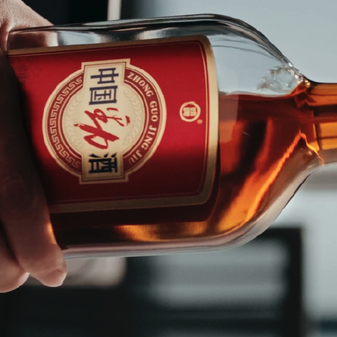
At the product communication level, Jingjiu integrates herbal wellness culture into packaging and promotion, using a dominant red color scheme and traditional visual elements to create distinctiveness. Meanwhile, it downplays the singular attribute of "liquor," emphasizing herbs, health, and consumption scenarios, linking the product with an Eastern lifestyle to achieve synchronized output of product and culture.
4. Localized Operations: Adaptation in Channels, Marketing, and Talent
Localized operation is a crucial aspect of Jingjiu's overseas expansion. It adopts localized strategies in channels, marketing, and talent to reduce market entry costs and improve operational efficiency.
In channel development, Jingjiu employs a multi-channel layout combining online and offline approaches. Offline, it collaborates with local distributors to enter supermarkets, restaurants, duty-free shops, and other retail terminals, and establishes brand experience points in key markets. Online, it joins platforms like Amazon, Shopee, and Lazada, reaching consumers directly through cross-border e-commerce, while also increasing exposure via social commerce and live streaming. It adjusts channel focus for different regions: emphasizing offline supermarkets and restaurants in Southeast Asia, strengthening online and high-end channels in Europe and America, and focusing on wholesale markets and community convenience stores in Africa for precise coverage.
In brand communication, Jingjiu adopts a "global standard, local expression" approach. On one hand, it participates in international spirits competitions and industry exhibitions to enhance credibility through authoritative certifications. On the other hand, it conducts marketing activities aligned with local culture, such as hosting food festivals in Southeast Asia and wellness experience events in Japan and South Korea. It also publishes localized content on platforms like Facebook, Instagram, and YouTube, explaining product formulations and consumption scenarios to enhance user interaction. Furthermore, it continues the communication concept of "responsible drinking," promoting the idea of moderate consumption in overseas markets to establish a compliant and responsible brand image.
In terms of talent and partnerships, Jingjiu builds operational teams with local talent at the core. Overseas branches prioritize hiring personnel familiar with the local market, regulations, and culture, while headquarters provide strategic, quality, and brand support, forming a "local decision-making + headquarters empowerment" model. Additionally, by sharing benefits and empowering distributors, it builds a stable cooperative ecosystem to ensure sustainable market operations.
5. Cultural Communication: International Expression of Eastern Wellness Philosophy
Jingjiu's internationalization process is accompanied by the external communication of Chinese herbal wellness culture. Using "Eastern Healthy Lifestyle" as its main communication theme, it combines traditional herbal knowledge with modern health concepts. Through product experiences, cultural activities, and academic exchanges, it conveys traditional wisdom such as "food and medicine share the same origin" to overseas consumers, making the product a carrier for cultural transmission.
In market promotion, Jingjiu enhances overseas consumers' understanding of Eastern wellness culture by popularizing the efficacy of herbal ingredients, hosting wellness forums, and organizing cultural experience activities. It collaborates with local universities and research institutions to promote the study and application of herbal wellness culture, enhancing the professionalism and sustainability of cultural communication. Through this model, beyond commercial expansion, Jingjiu also undertakes a function of cultural exchange, simultaneously boosting brand influence and social recognition.
6. Implications and Outlook: Reference Value for Chinese Brands Going Global
Jingjiu's internationalization practices offer several references for Chinese brands going global. First, differentiated positioning helps avoid homogeneous competition, allowing entry into the global market through niche segments and enhancing survival and development space. Second, strategic patience with a long-term vision, focusing on the continuous accumulation of quality, brand, and culture rather than short-term scale expansion, is conducive to building a sustainable overseas system. Third, deep localization is key to breaking through market barriers; full-chain adaptation from channels and marketing to talent can effectively reduce cultural and operational risks.
Looking ahead, with the continuation of global health consumption trends and the increasing influence of Chinese culture, Jingjiu still has room for expansion in markets like Europe, America, and Latin America. Its future development will depend on the continuous advancement of product innovation, channel refinement, and cultural communication to further enhance penetration and brand influence in mainstream markets.
From a regional brand to a national brand covering multiple countries and regions worldwide, Jingjiu's internationalization path demonstrates the value of long-term investment and localized operations. Against the backdrop of adjustments in the global liquor industry landscape and the broader trend of Chinese brands going global, its experience can provide lessons for more national brands, promoting the more effective entry of Chinese products and culture into the international market.
Reference
中央广电总台总经理室. (2023). 坚定携手总台 科技赋能劲牌高质量发展. http://www.cnr.cn
人民日报海外版. (2024). 劲牌公司副总裁兼劲牌研究院院长杨强 用"创新"基因拓国际市场. http://www.people.com.cn
劲牌总裁王楠波:劲酒增长超20%,两年新增年轻用户900多万. (2025. 微酒传媒. http://www.wejiu.com
Micu, D. M., Arghiroiu, G. A., Micu, Ș., & Beciu, S. (2025). Competitive Advantage in the World of Wine—An Analysis of Differentiation Strategies Developed by Sectoral Brands in the Global Market. Foods, 14(11), 1858. https://doi.org/10.3390/foods14111858
劲牌的品质密码,藏在6300项标准里. (2024). 云酒头条. http://www.yunjiutoutiao.com
夏伟. (2025). 从"万人品鉴"到"东方调",劲牌以新表达激活老品牌. 云酒头条. http://www.yunjiutoutiao.com
Author's Bibliography
Dr. Jiajia Pan completed his undergraduate studies at Université Blaise Pascal (Clermont-Ferrand II) in France and Copenhagen Business School in Denmark, earned his master's degrees from Université Jean Moulin (Lyon III) in France and Lingnan College of Sun Yat-sen University, and obtained his doctoral degree from The Education University of Hong Kong.
He holds the national first-level oenologist and national first-level wine taster qualifications in China, and also serves as a winery investor and publisher. He is currently an off-campus supervisor for master's programs at the School of Tourism Management of Sun Yat-sen University, the School of Tourism of Xinjiang University, the School of Tourism Management of South China Normal University, the School of Wine and Horticulture of Ningxia University, and Burgundy School of Business.
With 20 years of experience in the wine industry, his business scope covers international trade, brand marketing, market sales, winery investment, cultural communication and professional personnel training and education.
In terms of academic achievements, he is the co-editor-in-chief of the China Wine Industry Integrated Development Report (Blue Book of China Wine Industry), and has edited and published multiple wine-related textbooks and books including Sommelier Service and Management and Tasting Chinese Wine. He initiated the "China Wine Academy" program, which promotes the global outreach of Chinese wine brands and culture by building an international education system for Chinese wine.
His research interests cover wine marketing, wine tourism, wine sensory evaluation, wine supply chain management and vocational education. He also serves as the editor-in-chief of the Chinese-English journals Global Cases and Practices of Vocational Education and Commentary on China's Wine Industry.