
 Viewed: 41
This article is translated from the Chinese-language original of
Commentary on China's Wine Industry, Volume 1.
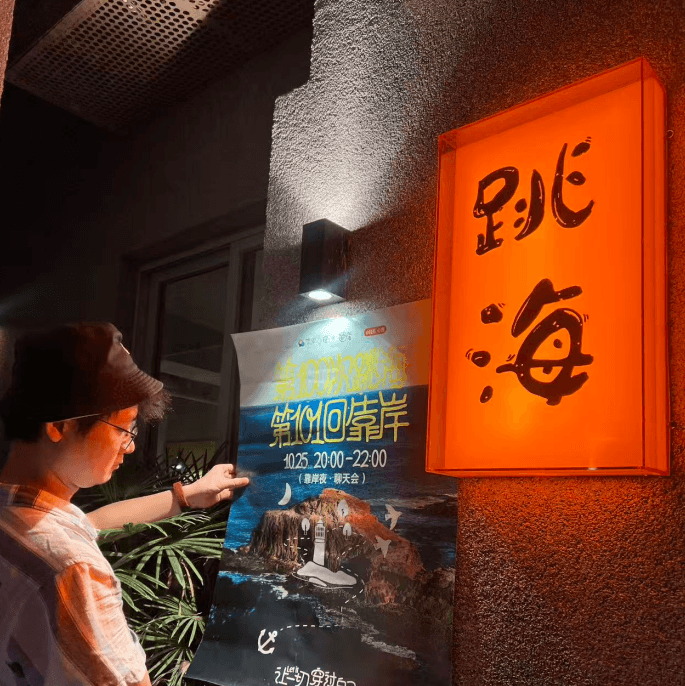
While Tiaohai Craft Beer Bar (hereafter referred to as Tiaohai) has swept across the young consumer market nationwide in just a few years and become a social landmark with a daily foot traffic exceeding 10,000, the Chinese wine industry is still trapped in the dilemma of a "youth consumption gap". On one hand, craft beer accurately captures the consumption demands of Generation Z through a non-standardized model and high user engagement. On the other hand, domestic wine adheres to the traditional perception of "high-end, professional, and ritual-oriented", gradually drifting away from young groups. The phenomenal success of Tiaohai is by no means accidental. Its underlying logic of community operation, scenario construction and value transmission can provide critical references for the cultivation of young consumer groups in the Chinese wine industry.
Tiaohai is not a craft beer bar in the traditional sense. It is a community-driven brand originating from Beijing, founded by Liang You with a Home Bar as the starting point. It rose rapidly after opening its first store in 2019. Tiaohai positions itself as a cultural company, adhering to the philosophy that "at Tiaohai, drinking is the least important thing". Its core mission is to provide young people with a third space for low-cost social interaction.
By the beginning of 2026, Tiaohai has deployed more than 50 stores in 16 mainland Chinese cities, as well as Hong Kong, Singapore and Japan, all of which are profitable. It has also expanded cross-industry into the hospitality sector. The brand boasts a unique community ecosystem, with over 10,000 registered part-time bartenders nationwide, most of whom are converted from regular customers. Each store hosts more than 200 offline activities annually, 80% of which are spontaneously organized by users. Following the expansion logic of "where the people are, the store is", Tiaohai has become a highly sought-after social landmark among Generation Z.
The success of Tiaohai essentially stems from its precise alignment with the unmet needs of young consumer groups, breaking the promotion barriers of traditional alcoholic beverages through three core logics. First, it constructs emotional resonance driven by community operations. Centered on the core concept that "drinking is the least important thing at Tiaohai", the brand has established hundreds of highly active online communities, transforming customers into bartenders and forming a consumption scenario of "acquaintance socialization + interest aggregation". This elevates drinking from a single behavior to a carrier of community belonging. Second, the non-standardized model lowers the participation threshold. Part-time bartenders face no professional qualification requirements, stores feature diverse styles, and users are encouraged to initiate cultural activities. This weakens the ritual sense of consumption while enhancing relaxation, which perfectly matches young people's demand for low-cost social interaction. Third, Tiaohai integrates emotional value into product expression. Its self-developed beer names resonate with youth emotions, and the multi-functional consumption scenarios in some stores cover diverse daily needs. This turns products into a medium for emotional release and self-expression, rather than mere beverages.
Compared with the precise positioning of Tiaohai, the Chinese wine industry has first fallen into the predicament of "cognitive shaping deviation" in its promotion among young groups. For a long time, wine has been excessively tied to scenarios such as high-end business occasions and festival banquets. Brand narratives focus on professional jargon such as "terroir, tannins, and vintages", forming an inherent perception of "high threshold and strong sense of distance", which runs counter to the relaxation and socialization pursued by young people. While Tiaohai narrows the gap with consumers through "de-professionalization", Chinese wine continues to reinforce professional barriers, discouraging young consumers. Some domestic wine brands blindly follow the trend of "youthfulness" by only making superficial changes to packaging and naming, without in-depth insight into the social and emotional demands of young groups. This leads to a disconnect between promotional content and actual consumption needs, making it impossible to form emotional resonance, and eventually falling into the awkward situation of "wide promotion with poor acceptance".
The phenomenal breakthrough of Tiaohai also relies on its precise coverage of young people's consumption scenarios. In contrast, the insufficient adaptation of consumption scenarios is a key reason why Chinese wine has missed the youth market. Young people's drinking scenarios are mostly informal ones such as small gatherings with friends, casual daily drinks, and late-night solo moments, where they pursue convenient, relaxing and low-cost experiences. However, the Chinese wine industry still focuses on traditional scenarios such as offline wineries and high-end restaurants, with products mainly in standard-sized bottles. It lacks small-format, lightweight products suitable for solo drinking and immediate consumption. Moreover, domestic wine brands rarely take the initiative to build youth-oriented consumption scenarios. There is neither scenario extension for diversified consumption like Tiaohai, nor user-participatory cultural activities. As a result, wine can hardly integrate into young people's daily lives, and only serves as an ornament on special occasions rather than a daily consumption necessity.
Community operation is also one of the key success factors of Tiaohai, which helps build a highly cohesive user base. In contrast, most of the Chinese wine industry's operations for young users rely on traditional customer acquisition methods such as offline tasting events and online advertising. After the promotion ends, the connection with users is broken. No communication bridges are built between brands and users, or among users themselves, making it difficult to form repurchases and word-of-mouth dissemination. The industry is still in the shallow stage of one-off promotion, lacking a long-term maintenance mechanism. Meanwhile, insufficient attention is paid to young users' sense of participation. There is neither a deep user engagement model like Tiaohai's "part-time bartender" system, nor interactive mechanisms to encourage user co-creation and sharing. This results in users only existing as consumers rather than participants and disseminators of the brand, making it difficult to establish long-term brand loyalty.
Drawing on the successful experience of Tiaohai, the Chinese wine industry can make efforts from three dimensions: cognition, scenario and operation, to reconstruct the cultivation system for young consumer groups. At the cognitive level, it is necessary to break professional barriers and restructure brand narratives, interpreting wine with youth-friendly language, weakening ritual sense and highlighting social attributes, so as to return wine to its essence as a beverage. At the scenario level, the industry can focus on young people's daily scenarios, launch small-format and lightweight products, and expand diversified scenarios such as community stores, to integrate wine into young people's life trajectories. At the operational level, by building a community operation system and encouraging users to participate in product co-creation and activity planning, the industry can build a highly cohesive user community and achieve low-cost customer acquisition through word-of-mouth dissemination.
The phenomenal success of Tiaohai reveals that the cultivation of young consumer groups is never a simple matter of "lowering prices and changing packaging", but an in-depth insight into consumption demands and the construction of value resonance. For the Chinese wine industry, putting down the "high-end filter", stepping into young people's life scenarios, and communicating and interacting with them in their preferred ways is the only way to break the dilemma of the youth consumption gap and find a promotion path suitable for young consumer groups.
Reference
Deng, X. (2024). Research on Social Media Marketing Strategy of Tavern A (Master's dissertation, Central China Normal University).
Kang, Y. (2020). Private domain traffic: Concept discrimination, operation modes and operation strategies. Modern Business, (23), 10-12.
Li, C. (2023). Tiaohai: When the tavern meets the "Internet". East China Science & Technology, (11), 32-34.
Liu, P., & She, C. (2021). Research on influencing factors of young groups' consumption experience under the new retail environment. Management & Technology of SME (Mid-month Issue), (12), 170-172.
Shi, K. (2025). Tiaohai Craft Beer Bar takes an unconventional path. Entrepreneur, (05), 86-88.
Sun, Y. (2021, October 22). Small tavern, big market. China Consumer News, 004.
Author's Bibliography
Dr. Wei Xia holds the PhD in Hotel and Tourism Management, The Hong Kong Polytechnic University; Master of Tourism and Hotel Management, School of Business Administration, Sun Yat-sen University. She holds an associate senior professional title, is a senior dual-qualified teacher, and was selected into the "Ten Thousand Tourism Talents" Program initiated by the former China National Tourism Administration.
With 20 years of frontline teaching experience in vocational education for the High-Star Hotel Operation and Management specialty, and over 15 years of dedication to wine vocational education and professional training, Dr. Xia has obtained multiple internationally recognized professional wine certifications, including the WSET Level 3 Advanced Award in Wines (UK) and the ISG Advanced Sommelier Qualification (USA). She has led and participated in nearly 10 national and provincial research projects, and was awarded the Second Prize of the National Teaching Achievement Award. Her academic publications include 1 officially published academic monograph and 2 textbooks, and she also owns 1 industrial design patent and 2 computer software copyrights. She has been invited to deliver keynote speeches at industry events on multiple occasions, and has served as a judge and executive director for major competitions in the wine and beverage industry.
Dr. Rusha Deng is currently a postdoctoral researcher and assistant researcher at the School of Tourism Management, Sun Yat-sen University, with research interests in tourism economics and cultural creativity.