 Viewed: 51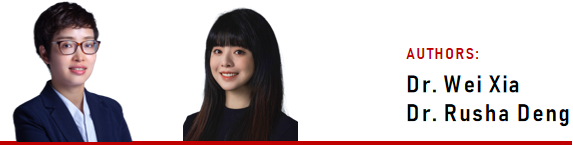
This article is translated from the Chinese-language original of
Commentary on China's Wine Industry, Volume 1.
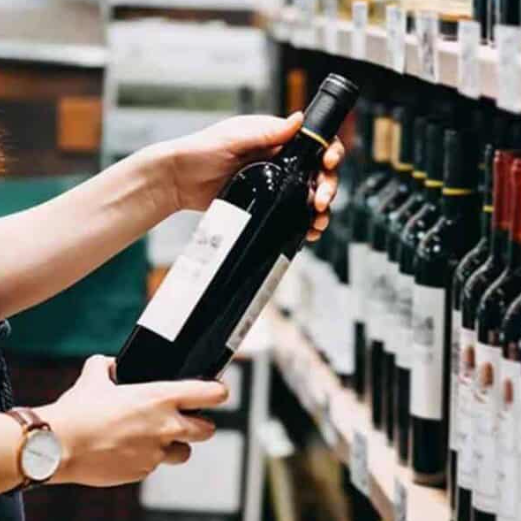
The promotional script — "Priced at 998 yuan, the price drops directly to 198 yuan on site, then an extra 40% off, and the final price is only 118 yuan!" — is a common sight in China's wine market. From offline exhibitions, winery tasting events to live-streaming rooms and community group-buying online, the "high markup, deep discount" model has seemingly become a prevalent pricing and sales pattern in China's wine industry. However, behind this seemingly lively promotional carnival lies the disorder and imbalance in the pricing system of China's wine industry.
"Falsely marking high prices and offering substantial discounts" is not a simple marketing strategy, but a short-sighted behavior that damages brand reputation and erodes consumer trust. When consumers gradually form the expectation of "no purchase without discounts", and brands rely on discounts to maintain sales, the sustainable development of China's wine industry will face more severe challenges.
This widespread "high markup, deep discount" model is a deformed choice for enterprises driven by the superposition of multiple factors.
First, some domestic brands have strategic myopia in the fierce competition. At present, China's wine market is in a state of intense white-hot competition, with a large influx of low-priced imported wines and serious homogenization among local brands. Small and medium-sized brands lack core competitiveness, with neither prominent terroir advantages nor mature brand accumulation, making it difficult to achieve differentiated breakthroughs through quality and reputation. Influenced by the cognitive bias that "high price equals high-end", some enterprises choose to first set a high price to create a high-end image, and then attract price-sensitive consumers through substantial discounts in exchange for short-term sales. Under this model, discounting is no longer a promotional means, but has evolved into a survival dependency. As for the long-term brand development and trust building, they have long been abandoned for the sake of short-term sales targets.
Second, consumers' cognitive biases have fueled the deformation of pricing strategies. For a long time, some consumers have had misunderstandings about wine, directly equating price with quality, believing that high-priced wine must have higher quality, while low-priced wine is equivalent to inferior products. This cognitive bias is accurately captured by brands, which deliberately mark high prices to cater to consumers' psychology of pursuing high-end status and demonstrating taste, and then make consumers feel that they have obtained a bargain through discounts to stimulate consumption. As a result, in the repeated bombardment of discounts, consumers gradually form the consumption habit of "no purchase without discounts", which further forces brands into a cycle of successive discounts. Products cannot be sold without discounts, but discounts can only lead to continued falsely high pricing, eventually forming a vicious cycle of "falsely high pricing - discount promotion - greater reliance on discounts".
Third, the lack of industry supervision and gaps in standards have contributed to this problem. At present, China's wine industry has not established a sound pricing supervision system, nor has it clear pricing standards. Wine pricing is mostly determined independently by brands, lacking the review and restraint of third-party institutions. It is difficult for consumers to verify the costs, whether it is the tariffs and transportation costs of imported wines, or the planting and winemaking costs of local wines, which provides space for price manipulation. Some brands even deliberately conceal costs, and then offer substantial discounts under the pretext of "manufacturer subsidies" or "limited-time benefits", creating the illusion of "giving benefits to consumers". Consumers are always in a weak position of information asymmetry, making it difficult to distinguish the rationality of pricing.
This industry-wide carnival of successive discounts seems to have brought sales growth to domestic wines, but in fact, it is quietly destroying the foundation of brand development: brand image and consumer trust. This damage is irreversible and the most fatal.
First of all, "high markup, deep discount" destroys the foundation of consumers' trust in domestic brands. The core of trust is sincerity, and falsely marking high prices is essentially a deceptive behavior. When consumers find that the "998 yuan high-end wine" they bought for 118 yuan may actually cost less than 50 yuan, and the so-called high-end quality is just false publicity, their sense of gain will instantly turn into anger and disappointment of being deceived. One or two experiences of getting a bargain may bring short-term goodwill, but long-term price tricks will make consumers gradually lose trust in brands, and even question the entire Chinese wine industry, making it impossible for brands to build a stable consumer base and brand loyalty.
Secondly, this behavior will seriously overdraw the high-end image and value of brands. A real high-end brand is never supported by a high price tag, but by stable quality, clear positioning and long-term reputation accumulation. For example, well-known châteaux in Bordeaux, France, have transparent and stable pricing, rarely offering substantial discounts. Their brand value comes from centuries of terroir accumulation and quality persistence, rather than price tricks. In contrast, some domestic brands try to create a high-end image by falsely marking high prices, but frequently offer discounts, which will eventually leave the brands in an awkward situation of "neither truly high-end nor affordable". Consumers will think that such brands are not worthy of their reputation. Even if they launch truly high-quality products later, it will be difficult to change consumers' negative perceptions, and the brand value will be greatly reduced.
What is more noteworthy is that the "high markup, deep discount" model will trap brands in a vicious cycle of discount dependence, and eventually lose their core competitiveness. When brands get used to exchanging sales through discounts, they will gradually neglect quality improvement and brand building, and devote more energy to pricing tricks and promotional tactics. Over time, brands will lose their motivation for innovation, find it difficult to create products with core competitiveness, and can only consume each other in the discount war, eventually falling into the quagmire of "low-price vicious competition".
In addition to harming individual winery brands, the pricing chaos caused by "high markup, deep discount" will further erode the healthy ecology of China's wine industry from a systematic level, triggering a series of internal industrial frictions and hindering the sustainable development of the industry. First, this behavior disrupts the industry's pricing system. When more and more brands follow suit, the entire industry's pricing system will be completely out of balance. Consumers cannot judge product quality based on price, and market competition will tend to be disorderly, leading to vicious competition. At the same time, when "high markup, deep discount" becomes a common phenomenon, consumers are likely to form a negative impression that "domestic wines are all relying on marketing tricks", which ultimately reduces the overall trust and recognition of domestic wines. Even if there are truly high-quality products in the industry, it will be difficult to break consumers' negative perceptions. Furthermore, this "high markup, deep discount" chaos will give the international market a negative impression that Chinese wines are "unprofessional and non-standard", making it difficult to gain the trust and recognition of international consumers, thus hindering the internationalization process of China's wine industry.
To break the predicament of "high markup, deep discount" in China's wine market and rebuild brand trust and industrial ecology, the coordinated promotion of enterprises, the industry and regulatory authorities is needed to return to the essence of industrial development.
For brands, they should abandon price tricks and adhere to quality and sincere pricing. Brands should establish a long-term development concept, discard short-term price tactics, and focus on quality improvement, variety cultivation and brand building to create products with core competitiveness. They should formulate a transparent and stable pricing strategy based on real costs, reasonable profits and product value.
For the industry, it is necessary to strengthen self-discipline and build a benign pricing ecology. Industry associations should play a guiding role, take the lead in formulating industry pricing norms and self-discipline guidelines, guide brands to standardize their pricing behaviors, and abandon the deformed promotional model of "high markup, deep discount". At the same time, strengthen industry training and publicity, guide brands to establish correct pricing concepts, make them realize the harm of price tricks to brands and the industry, and advocate a healthy competitive environment centered on quality and reputation.
In addition, relevant regulatory authorities should speed up the improvement of pricing supervision policies for the wine industry, establish and improve the pricing review and supervision mechanism, increase the investigation and punishment of illegal acts such as falsely marking high prices and false publicity, and strictly crack down on pricing chaos to standardize market order. At the same time, carry out consumer education to guide the public to form wine cognition and purchasing habits based on quality rather than marked prices.
The carnival of successive discount tricks is, after all, just a short-lived false prosperity.
The long-term development of China's wine industry never relies on price hype and discount tricks, but on stable quality, sincere pricing and continuous brand persistence. Only when the industry no longer indulges in the discount carnival and no longer clings to price tricks, but returns to the essence of quality and adheres to sincere pricing, can it rebuild consumer trust and cultivate local brands with international competitiveness.
Reference
苗思梦. (2022). JH酒业集团进口葡萄酒定价策略研究 (硕士 学位论文, 暨南大学).
穆维松, 吴晓倩, 齐建芳, 赵静静 & 冯建英. (2022). 中国葡萄酒产业发展形势及市场需求特征分析. 中外葡萄与葡萄酒, (04), 81-89.
唐文龙, 火兴三, 阮仕立, 刘涛, 王飞飞, 姜添耀 & 肖永杰. (2022). 中国市场葡萄酒品类价值的提升路径. 酿酒, 49 (04), 22-27.
徐先航. (2020). 中国葡萄酒产业国际竞争力评价研究——基于贸易绩效评价视角的分析. 价格理论与实践, (01), 171-174.
赵煜丹. (2020). 澳洲进口葡萄酒在中国市场的营销策略研究. 技术与创新管理, 41 (04), 413-418.
Author's Bibliography
Dr. Wei Xia holds the PhD in Hotel and Tourism Management, The Hong Kong Polytechnic University; Master of Tourism and Hotel Management, School of Business Administration, Sun Yat-sen University. She holds an associate senior professional title, is a senior dual-qualified teacher, and was selected into the "Ten Thousand Tourism Talents" Program initiated by the former China National Tourism Administration.
With 20 years of frontline teaching experience in vocational education for the High-Star Hotel Operation and Management specialty, and over 15 years of dedication to wine vocational education and professional training, Dr. Xia has obtained multiple internationally recognized professional wine certifications, including the WSET Level 3 Advanced Award in Wines (UK) and the ISG Advanced Sommelier Qualification (USA). She has led and participated in nearly 10 national and provincial research projects, and was awarded the Second Prize of the National Teaching Achievement Award. Her academic publications include 1 officially published academic monograph and 2 textbooks, and she also owns 1 industrial design patent and 2 computer software copyrights. She has been invited to deliver keynote speeches at industry events on multiple occasions, and has served as a judge and executive director for major competitions in the wine and beverage industry.
Dr. Rusha Deng is currently a postdoctoral researcher and assistant researcher at the School of Tourism Management, Sun Yat-sen University, with research interests in tourism economics and cultural creativity.