 Viewed: 35
This article is translated from the Chinese-language original of
Commentary on China's Wine Industry, Volume 1.
My first visit to Xige Winery took place on an early August day in 2022. At that time, the grapes were in the veraison period, and the vineyard was flourishing, brimming with vibrant vitality. Our minibus drove along the monotonous gray highways of Yinchuan, until at a corner, the gray-brown circular building, which shares the exact same hue as the Helan Mountains, suddenly came into my view. Its circular walls, built with 200,000 Helan Mountain stones, resemble a bronze vessel growing out of the land, solemn and dignified, while the fully transparent glass curved dome is as light as a flock of pigeons that might take flight at any moment.
This sense of contradictory yet harmonious unity struck me instantly. This is exactly what "the dance of Eastern and Western civilizations" looks like! Like most people who cheered with excitement on their first visit, I couldn't wait to take my first photo with Xige Winery in front of its iconic logo at the entrance. Back then, I certainly did not realize that this symbiosis of elegant and solemn Eastern charm and agile modern Western aesthetics would later become the key to my understanding of Xige.
In July 2025, two weeks before my trip to Ningxia, I introduced our interview project to Winery Director Zhang Yanzhi on WeChat, hoping to get an opportunity for an in-person interview. Director Zhang readily agreed, directly confirmed the specific time according to my travel itinerary, and arranged for Ms. Zhao Qian, Head of Public Affairs of Xige Winery, to coordinate with me. The interview day coincided with Xige's semi-annual sales meeting, where distributors from all over the country gathered at the winery. As the leader of this big family, the Director naturally had to participate, especially under the current extremely difficult economic situation, his presence and speech could bring a great deal of confidence to everyone.
Thanks to the coordination and adjustment made by Director Zhao Qian in this extremely tight schedule, we finally managed to squeeze out an hour for the interview as originally planned. Thus, we completed this nearly-aborted interview in the Director's office.
1. On the Eastern Helan Mountain Foothill Appellation
"Why not try Chinese wine?" — Zhang Yanzhi
"When you recommend the Eastern Helan Mountain Foothill Appellation in Ningxia to the world, what three keywords would you use and what are your reasons?"
To my question, Director Zhang did not give a set of keywords. In his view, every appellation has its own uniqueness, and neither three nor even thirty keywords can fully summarize the style of a single appellation. Specifically for China, we joined the International Organisation of Vine and Wine (OIV) in 2024, becoming the 51st member state of this global wine family. In Director Zhang's eyes, these 51 countries all have different characteristics, together forming a diverse puzzle of the global wine world.
"If you compare the different advantages of each region, there is actually no absolute comparability between them." Consumers have a natural curiosity for novelty, and they demand wines from different appellations. Therefore, "as long as the wines from the Eastern Helan Mountain Foothill are made well enough, I think it is a fully sufficient reason for consumers to give them a try."
However, there is a long way to go from being a new appellation to becoming a world-renowned one. From the very beginning, the Eastern Helan Mountain Foothill has never been willing to be a mediocre appellation, and its goal has always been to enter the first tier of the global wine landscape. Here lies not only the Yellow River, the mother river that provides irrigation for the desert, but also the Helan Mountain, the father mountain that blocks the severe cold and sandstorms from the northwest, as well as the gravel soil suitable for wine grape cultivation. This region is endowed with innate terroir advantages to become a high-quality wine grape producing area. Taking the Gezishan area where Xige Winery is located as an example, Director Zhang believes that it "feels particularly similar to the Right Bank of Bordeaux, even though we are very reluctant to compare the Eastern Helan Mountain Foothill with any other appellation, because the Eastern Helan Mountain Foothill is completely unique."
Meanwhile, as a typical arid and semi-arid appellation, the Eastern Helan Mountain Foothill also features long sunshine hours, large diurnal temperature differences, and a dry and rainless climate, which is suitable for the cultivation of most wine grape varieties. "If you just want to be a follow-up appellation, you can just plant whatever varieties are popular." But if it wants to become a unique presence in the world-renowned appellation map, the Eastern Helan Mountain Foothill must find its own style and signature grape varieties. Just as Bordeaux has its powerful Cabernet Sauvignon and Burgundy has its elegant Pinot Noir, what unique strengths can the Eastern Helan Mountain Foothill use to establish its own position in the global wine industry?
In response, Director Zhang does not recommend the appellation to experiment with too many grape varieties. "People often say that the differentiation between wineries means I have to grow a unique variety, but I don't think that is real differentiation." He still uses Bordeaux, the most familiar example for the public, to illustrate: the Left Bank only has 3-4 main grape varieties, and the Right Bank has even fewer, only 2-3 main varieties. Yet thousands of wineries in Bordeaux continuously adjust their viticulture and winemaking practices based on these few varieties, finally forming the unity of the appellation and the respective stylistic differences of each winery, which has helped Bordeaux become the holy land of wine worldwide.
Therefore, "the real differentiation is that under the same set of game rules and the same selection of grape varieties, everyone strives to make their wines show different styles." Selecting representative varieties suitable for Ningxia from more than a dozen high-quality grape varieties, and pursuing the differentiation between wineries under the common characteristics of the appellation, in his view, is the path that the Eastern Helan Mountain Foothill should and must take to become an outstanding appellation.
2. On Xige Winery
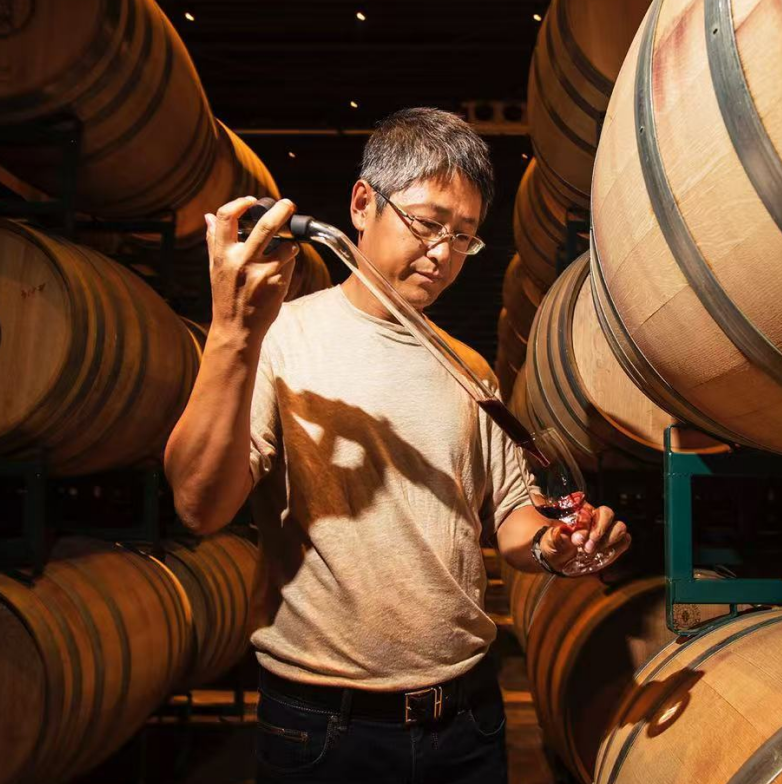
"When we design a boutique winery in China, we must not be constrained by scale. Don't assume that boutique must mean small scale. The definition of boutique is whether your quality is good enough, and I think that is the only judgment criterion." — Zhang Yanzhi
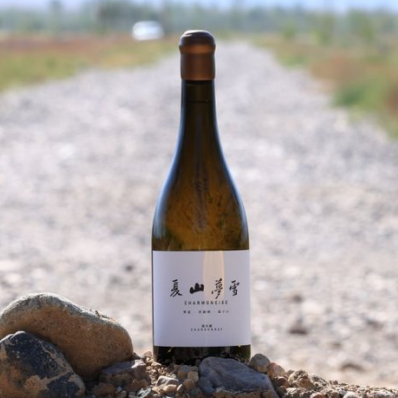
Xige Winery was founded in 2017, and produced its first vintage of wine in the very year of its establishment. Now it has entered its ninth year of development. In this not-too-long history, Xige has developed rapidly. Especially since 2021, the main brand image of the winery has become increasingly distinct and clear. Its product lines are increasingly rich and comprehensive, covering all price tiers of wine consumption: the flagship "Tengshangteng" series, the characteristic boutique "Yuge Single Vineyard" series, the innovative and exploratory "X" series, and the most widely known "N" series. At the same time, Xige has won numerous heavyweight awards in various professional wine competitions.
These honors are not only recognition of Xige's professional strength, but also reflect its leading position in the Eastern Helan Mountain Foothill Appellation and even the entire Chinese wine industry. As Director Zhang said, "Wine enthusiasts and our peers in Ningxia have shown increasingly high recognition of Xige. Whether in terms of business scale or brand reputation, we are firmly in the first echelon."
However, does professional excellence necessarily translate into market influence? Director Zhang has his own sober and unique insight on this point: "We found that awards actually have a relatively weak connection with the market and consumers. Therefore, all these endorsements must eventually be transformed into brand power, and what consumers will ultimately remember is the Xige brand."
Based on this philosophy, Xige attaches great importance to its own brand construction and promotion, and enhances its brand image and influence by participating in a series of high-standard economic, trade and foreign affairs activities. For example, Xige was selected as the official designated wine for the 2025 BRICS Leaders' Summit and the SCO National Film Festival, making its grand debut on the international stage to showcase the image of a Chinese winery to the world, which has greatly enhanced Xige's brand value.
Talking about the future of Xige, Director Zhang said frankly, "I don't think China is short of a few extremely good and extremely expensive Pinot Noirs. What China lacks is a large number of wines that are both high-quality and reasonably priced."
Therefore, although he is a formally trained oenology professional, Director Zhang is not obsessed with building Xige into a cult winery. Regarding the "X" series that is popular among professional wine enthusiasts, Director Zhang said with a smile, "For me, X represents infinite possibilities of exploration, and it is also an attitude: we are capable of making great wine, and we can make very expensive wine, but what we want to sell to consumers is wine that is both good and affordable." Enabling Chinese consumers to drink high-quality Chinese wine with higher cost-effectiveness is his positioning for Xige. "Therefore, Pinot Noir will not become the main promoted variety of Xige."
3. On the Chinese Wine Market
"If China wants to develop its own wine industry, we should view China from a global perspective, rather than only viewing China within its own borders. We must step outside to see the bigger picture."
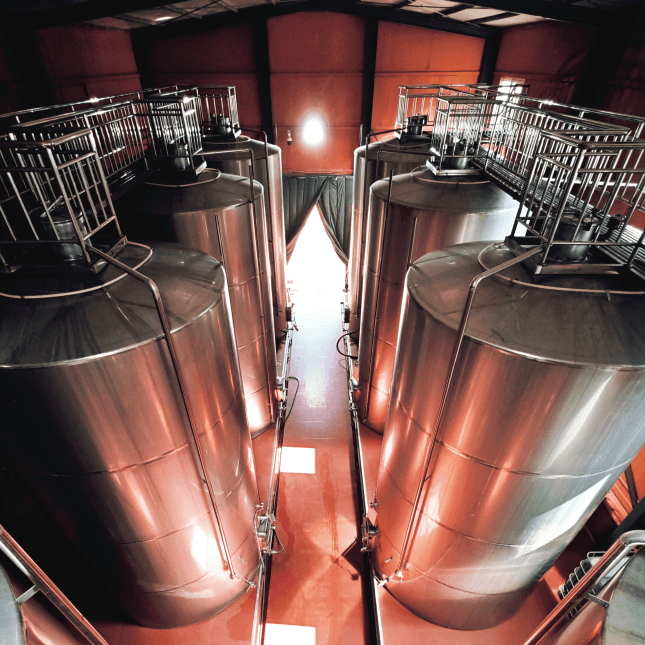
As a winery founded by Chinese people, internationalization has been engraved into Xige's genes since the day it was born. For example, Xige's winemaking workshop has introduced New Zealand's intelligent temperature-controlled winemaking system, equipped with New Zealand's fully automatic temperature control and automatic circulation system. In addition, at the initial stage of winery design, Xige carried out in-depth cooperation with the Marlborough Appellation in New Zealand, committed to building an international and modern winery that integrates Chinese and Western cultures.
For Xige, the integration of Chinese and Western cultures is never only reflected in the architectural shape of "round sky and square earth". This is closely related to Director Zhang's own background: he graduated from the College of Enology at Northwest A&F University, and also has overseas study experience — he obtained his master's degree at the University of Bordeaux's Institute of Oenology in France and earned the national oenologist diploma. To a certain extent, Xige and Director Zhang are both products of the perfect integration of Chinese and Western cultures.
Currently, Xige is actively engaged in the internationalization process. Its products are sold to more than 10 countries and regions including Canada, Australia, Singapore, and the United Kingdom, and its export volume accounts for nearly half of Ningxia's total wine exports. On the long journey of "making the world fall in love with Chinese wine", Xige is responding to the historical mission that Chinese wineries should undertake with practical actions.
When asked about how to face the vastly different international and domestic wine consumption markets, Director Zhang admitted that the Chinese market, Chinese consumers and Chinese wine consumption scenarios have their own uniqueness, but he emphasized more on the universal flavor standards of wine as an international beverage: "Wine is a global language. People from different countries may have different communication styles, but when it comes to wine, everyone shares the same evaluation criteria and drinking habits."
Therefore, "Chinese consumers love good wine. As long as a wine is loved by foreign consumers, there is a high probability that Chinese consumers will also love it... In fact, there is no need to distinguish whether the consumers are foreign or Chinese." In his view, high-quality products can cross national borders. When we overly emphasize the particularity of the Chinese market, we may automatically give up the right to compete equally with other excellent appellations on the international stage, which is essentially a conservative and regressive attitude.
Our interview lasted for nearly 50 minutes, and ended 10 minutes before the start of Xige's semi-annual sales meeting as agreed. Director Zhang hurried to the distributor conference venue. In this difficult period, everyone especially needs his encouragement and guidance. For the current Chinese wine industry, in this period of economic downturn, we also particularly need leading enterprises like Xige to bring the right values to consumers.
As Director Zhang said, "We will make exceptionally good wines just like the world-famous appellations do. We will tell the wine stories in our own way and make them accepted. Perceptions can be changed. As long as more and more wineries are doing the right things, and as long as Chinese appellations become more and more famous, I believe this perception will be reversed one day."
Reference
Gu, Q., Li, M., Guo, Z., & Shi, F. (2025). Mapping wine tourists’ spatial movement patterns in an emerging wine tourism destination: An exploratory study. Tourism Economics, 31(6), 1208-1235.
Gu, Q., Zhang, H., Huang, S. (Sam), Zheng, F., & Chen, C. (2021). Tourists’ spatiotemporal behaviors in an emerging wine region: A time-geography perspective. Journal of Destination Marketing & Management, 19, 100513.
Cheng, J. (2023). Research on the evaluation of winery tourism landscape based on AVC theory (Master's dissertation, Ningxia University).
Feng, Y., Zhao, N., Guo, W., Cui, P., & Chen, W. (2022). Application of "3S" technology in the development and construction of large-scale grape bases: A case study of the newly built Gezishan base of Xige Winery in Ningxia. Ningxia Journal of Agriculture and Forestry Science and Technology, 63(Z1), 88-93.
Zhang, Y. (2022, August 2). Who will become the next listed company in domestic wine? China Alcoholic Drinks News, A01.
Author's Bibliography
PhD in Hotel and Tourism Management, The Hong Kong Polytechnic University; Master of Tourism and Hotel Management, School of Business Administration, Sun Yat-sen University. She holds an associate senior professional title, is a senior dual-qualified teacher, and was selected into the "Ten Thousand Tourism Talents" Program initiated by the former China National Tourism Administration.
With 20 years of frontline teaching experience in vocational education for the High-Star Hotel Operation and Management specialty, and over 15 years of dedication to wine vocational education and professional training, Dr. Xia has obtained multiple internationally recognized professional wine certifications, including the WSET Level 3 Advanced Award in Wines (UK) and the ISG Advanced Sommelier Qualification (USA). She has led and participated in nearly 10 national and provincial research projects, and was awarded the Second Prize of the National Teaching Achievement Award. Her academic publications include 1 officially published academic monograph and 2 textbooks, and she also owns 1 industrial design patent and 2 computer software copyrights. She has been invited to deliver keynote speeches at industry events on multiple occasions, and has served as a judge and executive director for major competitions in the wine and beverage industry.